
How to do interviews

Interviews, in their various forms, are certainly among the most widely adopted methods of qualitative data collection. This is hardly surprising – although observing, recording, inferring, etc. are all effective ways of obtaining rich (and in some cases – more relevant) data, there is nothing like face-to-face interaction. We are so used to oral communication that it just feels like our “natural” method of enquiry – if you want to know something about someone, you ask them. This is not to say, however, that interviewing is something that can, and should be done without professional training and/or experience. Like any other research method, a good interview needs to be carefully planned, and “failure to recognise the special requirements of a qualitative research interview can result in the elicitation of data that have serious limitations for a study” (King and Horrocks, 2010: 1). A good interview may provide in-depth insights into the participants’ beliefs, feelings, experiences and opinions. A bad interview may not only be a waste of both the interviewer and the interviewee’s time but may also result in collecting data that is biased and not reflecting the participant’s honest opinions, and, in extreme cases, may even cause mental harm to the participants. Therefore, it is crucial that you enter the interview very well prepared. Below are some points you need to consider before, during and after the interview. Before the interview Regardless of how “structured” your interview is going to be (i.e. structured, unstructured or semi-structured), carefully plan the interview guide. Start with general topics you want to discuss and, then, design some questions that may help you answer your research questions. Organise the topics and questions in a logical sequence, so that they are grouped into similar topics and develop from each other. Also, if possible, try to start with earlier, and move towards more recent events, as well as start with simpler and more concrete topics and move on to more complex and abstract ones. If you plan to ask any questions that are “sensitive”, you may also want to ask them a bit later, as you develop rapport and make the interviewees feel comfortable and relaxed. Next, add follow-up questions (i.e. questions that encourage the interviewees to expand on their responses) to each question, trying to predict a range of potential responses you may get: Question: “Have you ever had any negative experiences with police officers?” Follow-up questions: When? Why do you think it happened? Why do you think you never have? How did it make you feel? How do you think this would make you feel? What did you do? Some additional things to keep in mind when developing your interview guide Types of interview questions – Kvale’s (1996) typology Introducing questions: ‘Why did you…?’ or ‘Can you tell me about…?’ Through these questions you introduce the topic. Follow up questions: Through these you can elaborate on their initial answer. Questions may include: ‘What did you mean…?’ or ‘Can you give more detail…?’ Probing questions: You can employ direct questioning to follow up what has been said and to get more detail. ‘Do you have any examples?’ or ‘Could you say more about…?’ Specifying questions: Such as ‘What happened when you said that?’ or ‘What did he say next?’ Direct questions: Questions with a yes or no answer are direct questions. You might want to leave these questions until the end so you don’t lead the interviewee to answer a certain way. Indirect questions: You can ask these to get the interviewee’s true opinion. Structuring questions: These move the interview on to the next subject. For example, ‘Moving on to…’ Silence: Through pauses you can suggest to the interviewee that you want them to answer the question! Interpreting questions: ‘Do you mean that…?’ or ‘Is it correct that…?’ Questions to avoid (Robson, 2002) Questions that are too long (the interviewee may forget what the question was about) Double-barrelled questions, or questions that actually include more than one question (e.g. “Do you like going abroad and relaxing on the beach?” – they may like going abroad, but not relaxing on the beach, or vice versa) Questions that include words that the participants may not understand Leading questions and biased questions – questions that suggest a particular response, or suggest that you may expect them to respond in a certain way (“What are the reasons football is a great sport to watch?”, “You don’t think that Ben Stiller is a good actor, do you?”) When you have your interview guide ready, you still need to address all the remaining organisational and technical issues. Set up time, date and place, prepare consent forms, etc. Determine how the interview will be recorded, make sure the equipment works and take some additional recording device, as well as a pen and paper (in the event when all the equipment fails, you really don’t want to ask your interviewee to “come again tomorrow”). During the interview Start with introducing yourself and your study. Explain the purposes of the study and remind the interviewee why you selected him or her for the interview. Also, explain the issues of confidentiality and how you will use the collected data. Explain that you will audio-record the interview… The above are the “obvious” things to include, and the ones that are always discussed in interview literature. What is less obvious, and what I really want to stress the importance of, is that at this stage your main goal should be to develop good rapport with the interviewee and make him or her feel confident and relaxed. You want to convince them that: You are a genuinely nice person to be around, not just a stiff “academic” or an “interviewer”. Therefore, They can be completely honest with you. You are really interested in what they have to say, and your goal is to accurately represent their complex individuality in your writing, not to “reduce [them] to little more than paper stereotypes (…) so that their
“Brace for impact!” – how to prepare for your Masters program

So, you’re getting ready for your Master’s? Here is how you can prepare. I prepared this list based on my previous experiences of doing a Master’s, and then a PhD degree. If you are reading this, you are probably motivated to make the most of your studies, so I trust that you will be motivated enough to follow this list. If you do, chances are you are going to be the most prepared student in your campus 😊 GET FAMILIAR WITH THE PRINTING AND PHOTOCOPYING FACILITIES (OR BUY A PRINTER) I would personally suggest buying a printer (You can buy one for as little as £25), because you will be printing A LOT. You will also need to photocopy and scan, and it is best to rely on yourself rather than the university’s printing services (for example, when you have to print something late at night or early in the morning before classes). LEARN TO COOK 😉 You will save time and money, and you will eat healthy, which is good for concentration and your overall well-being. I would also suggest generally paying attention to your physical health – consider signing up for a gym, jogging or playing sports in a park with fellow students. This will also help you to take your needed rests from studying and to either take your mind off the studies or (as it happens in my case) generate great ideas for your assignments/dissertation while engaging in physical activity. PRACTICE EFFECTIVE TIME MANAGEMENT As a graduate student, you will be given a lot of independence and, as a result, you will be tempted to procrastinate. At the same time, you will constantly have a lot of work to do – reading, attending classes, writing assignments (quite often with overlapping deadlines), some more reading, and some more reading…. You need to effectively plan your schedule for all of this because, believe me, it is not easy to keep on top of things when you’re studying. Buy a calendar-notebook or download a desktop app – whatever works best for you. Learn to constantly use it – write down all dates in there, all deadlines and all things to do for each day. With larger tasks, such as assignments, adopt a “top-down” approach which I describe in this video on how to plan your dissertation (start watching at 4:20). In short, make a detailed plan for everything and always stick to that plan. DON’T FORGET TO TAKE RESTS! It is absolutely crucial that you are just as serious about setting up your schedule for resting as about your learning schedule. Don’t forget to go out to meet your friends, drink beer in a pub or do sports; watch your favourite TV shows, read a book, or find another hobby. I am serious, I know people who have Literally lost their minds trying to study too hard and forgetting that, after all, we all deserve to relax every now and then. So, if you still haven’t put any days off studying in that calendar, do it now! PREPARE TO READ A LOT If there is recommended reading to go with your courses, start reading it as soon as possible. If you don’t, the amount of required reading will keep piling up, as you will also have to read a lot when you work on your assignments, and later dissertation. Also, as you read, you will be becoming more and more familiar with the topics you are studying, everything will start to make more sense and you will gradually find that both the content of your classes and your homework assignments seem easier. If you find a reference to a potentially interesting academic article or book that you are reading, check the reference list and find that text too, to read it for pleasure. As you read, you will gather ideas and develop interests in certain topics – make a note of these topics, eventually one of them may turn into the topic of your dissertation and you will be more or less familiar with the topic by then. ORGANIZE EVERYTHING very well This includes organizing course materials, notes and photocopies. Buy folders to separate and label these (as I said above, these documents and papers will keep piling up), create folders on your computer to put all the electronic stuff in (e.g. PDFs with research articles and books, assignment guidelines, etc.). When you read and find bits that you may potentially use for your assignments or dissertation, put them in a separate folder too. COLLECT MATERIALS FOR YOUR DISSERTATION THESIS I have said it several times already – during the whole academic year, whenever you come across topics/research papers, or anything else, that interests you, make a note of them. Also, write down your emerging dissertation ideas, if you have any (importantly, to start having these ideas you need to read a lot!). You will thank me later 😉 (The topic of preparing for your dissertation, in terms of thinking of methods of data collection, gaining access to your participants early, etc., will be discussed in my other blog posts, so I will not go into too much detail now, as the above list includes the things that you need to do really early in your academic year) Good Luck! PhD and former Master’s students – what would you advise from your own experiences? Please comment below and let’s make this a comprehensive check-list for new Master’s students!
You have collected your data – now what? Deciding what to analyse in your data and what to present in your results and discussion chapters

It is not uncommon to experience what this student described above. You have collected all your data (you may have also analysed some of it, at least initially) and now you are wondering what to do next. You may be wondering not only how to present it, but also what to present in the first place. I think what is important to remember at this stage, is that the main aim of your work (whether it’s a dissertation, PhD thesis, or an academic article) should be to provide contextually grounded (that is, based on your collected data) explanations/claims, etc., that will ultimately make some contribution to the existing knowledge (remember when you were explaining your rationale and why your study is needed?). Also, although it may be tempting to discuss all of these intriguing insights that you found in your data, I would suggest that if your time is limited, you should just focus on answering your research questions. If you have found something that is really interesting but does not really help you answer these questions, you may always keep it for future publications, or even for your current work, if time permits (although, from my own experience I can say that by the time you are done describing and discussing your results, the last thing you will feel like doing is adding more stuff to it), but now I suggest you just stick to your research questions. So, what have you found in your data that is relevant to these questions? What have you learnt from your data? I know, this is probably the exact thing that you are struggling to figure out when you look at this mass of opinions, stories and ideas in front of you, so I suggests you do the following exercises to try to get your head around its relevance for your study (and therefore, to get a clear idea of what to discuss in your results/discussion chapters), as well as to decide what else to analyse. ————————————————————————————————————————————————————————————- Start free writing about what you found in your data (to learn more about free writing, watch this video). Spend at least 5 (but if you feel that you will need more, you can make it 10) minutes writing about what you have learnt from your data – what are the things that you know now, but didn’t know before you collected/analysed this data? Don’t worry about the structure, just try to get as much on paper as possible. This may also include any assumptions or reflections resulting from you being familiar with the data. Once you have finished, create a table with each column being one of your research questions. Now, read through what you have written during your free writing activity and try to copy and paste extracts from it into a relevant column. In other words, try to decide which things that you have learned from your data answer a particular research question (it’s ok if some of these things fit into more than one column). Now, that you have a table with some indication of which parts of your data are relevant to your research questions, you may have a good starting point for writing up your results. Of course, since these ideas were sketched during a free writing activity, you may want to come back to your data and have another, more detailed, look at it, but with some sort of structure that you have in front of you now, at least it is a bit easier to see what else you still need to do. The table you have created may also be used for another activity that I often do when I try to interpret my data and develop some sort of a “theory” that would help me make sense of what I have in my data. ————————————————————————————————————————————————————————————- For this activity, you may either use the table you created for Activity 1 or you may just start from scratch, as I often do when I analyse my data. This is another free writing activity (did I tell you how much I love this technique? 😊). This time, write (5/10 minutes) about your data, but with your research questions in mind. Try to explain (you can imagine that you are presenting at a conference and you are talking to people who have no idea about your field and your study – for some reason it tends to help me) how what you have found in your data helps answer the particular research questions you have. This time, I want you to “think big” and not be afraid to make assumptions about the relationships found in your data, saying how some things you have found “possibly indicate” or “are likely to” mean something. Try to think of what (possibly) bounds your data and your research questions together, what may be the reason someone said something and some other person didn’t, why YOU THINK a particular group of people had a different opinion from another, etc. Try to really open your mind and be creative in how you view your data. Now, what is the purpose of the above theorising if so much of it are merely your assumptions, you may wonder. Doing this has always helped me “dig deeper” into my data. Once I have written down all these “working hypotheses” about my data, I start looking at my data again and try to determine if these working explanations may be, in fact, valid. Doing this helps me determine what else I need to focus on, what is lacking from my results. I try to find not just the evidence that would support these claims but, most importantly, the data that would dismiss them. And sure enough, most of these hypotheses will be dismissed. But the good thing about it is that as you focus on investigating these hunches, you are developing your understanding of the data and very often you are developing new explanations. To confirm
Research questions, research methods and philosophical assumptions

“There are no right answers to wrong questions.” – Ursula K. Le Guin Research questions are central to every study. Not only do they help you develop the study in the right direction (to enable you to understand the situation you are trying to understand/solve the problem you’re trying to solve, etc.), but they will also later help the reader evaluate the extent to which you really have achieved these goals. When I am asked to help someone with their study, either as a tutor or a research associate (e.g. to analyse and describe the data or to help develop research methods), the first thing I will ask of them is to tell me about the aims of the study and to tell me their research questions. I can do without knowing the former, but I cannot do without knowing the research questions. Similarly, one of the first things the examiner looks at when evaluating a dissertation are the research questions. So, what do the research questions say about you and your study? What your research questions say about you Let’s imagine for a minute that you are planning to investigate your participants’ “identity”. You are planning to conduct interviews in which you will ask the participants about their experiences and beliefs. You will also collect their diaries in which they will reflect on these experiences and beliefs and conduct a focus group discussion. You are interested in the participants’ perspectives and beliefs and you want to investigate how they are formed. You want to explore their perceptions of themselves, or their self-concepts, and their beliefs about their own, and other people’s, status in the wider social world. This is because you subscribe to the philosophical assumptions typically referred to as constructivism or social constructivism which are rooted in interpretive theories, which assume the existence of multiple emergent realities and aim to gain an understanding of the ways people construct meanings and actions within these realities. You believe that “identity” is not just who we are, but also who we think we are. These assumptions will be evident in both your research methods and your research questions that are likely to ask about “the participants’/students’/migrants’ beliefs about…”. Was your philosophical stance rooted in positivism, however, which assumes that “knowledge about the social world can be obtained objectively: what we see and hear is straightforward and recordable without too many problems” (Thomas, 2009: 74), you may not have any interest in the participants’ opinions whatsoever. In fact, you think that these views are completely irrelevant for a study of their identity. According to the principles of positivism, universal facts can, and should, be separated from subjective perceptions and beliefs and should be assessed using rigorous scientific methods that seek to ‘systematise’ knowledge, treat themes and concepts as ‘variables’ and use them to develop universal explanations and predictions of the researched issues (Charmaz, 2014). Therefore, using quantitative questionnaires, designing identity scales and applying inferential statistics (e.g. Khatib and Rezaei, 2013), or using observational methods (e.g. Jenks, 2013), to carefully document and ‘measure’ one’s identity would be seen as a methodological strength, according to the positivistic worldview. Furthermore, the participants’ subjective views would not contribute to, and would, in fact, obstruct, the understanding of their experiences. Your research questions ask what the participants’/students/migrants’ identity is, not what they think about it. What your research questions say about your study Research questions that ask whether “task-based teaching is effective in the Chinese context” imply that the methods you adopt will probably attempt to measure the participants’ achievement and that there are likely to be at least two (experimental-control) groups of participants whose achievement will be compared in order to investigate the effectiveness of this teaching methodology. When we see research questions that ask about “the students’ beliefs about the effectiveness of TBT”, however, we will, again, expect to see interviews, focus groups, etc., as well as a good rationale for why it is important to understand these beliefs rather than the actual effectiveness of the method. Finally, why is keeping the above in mind important? It is important because having good research questions is crucial for your study. Make sure that your research questions fit the methods that you chose in your study, so that the reader understands how your methods helped you answer these questions. If you ask whether “task-based teaching is effective”, for example, he or she will expect you to evaluate this effectiveness and answer this question by the end of your thesis/dissertation/paper. If you are a student, you are also required to discuss your philosophical assumptions in your thesis – make sure that these assumptions fit, and justify, the way you framed your research questions. References Jenks, C. (2013). ‘Your pronunciation and your accent is very excellent’: orientations of identity during compliment sequences in English as a lingua franca encounters. Language and Intercultural Communication, 13 (2), 165-181. Khatib, M. & Rezaei, S. (2013). A model and questionnaire of language identity in Iran: a structural equation modelling approach. Journal of Multilingual and Multicultural Development, 34 (7), 690-708. Charmaz, K. (2014). Constructing Grounded Theory. London: SAGE. Thomas, G. (2009) How to do your research project: a guide for students in education and applied social sciences, London: Sage.
Dr Kriukow’s guide to how to boost your job prospects while studying

When I was a PhD student, I was lucky enough to have a supervisor who constantly encouraged me to get involved in a variety of activities which I did not, at the time, perceive as being relevant to my main concern – writing my thesis. She encouraged me to submit my first conference paper, to organise a series of seminars in which both master’s and PhD students presented their research, and do other things that although I did enjoy, I did not understand how they were supposed to benefit me or my career in the long run. I did, however, the moment I started applying for jobs after completing my PhD. A crucial skill in applying for academic/research jobs is extracting from your previous experiences whatever is relevant to a given selection criteria and describing it in a way that makes you look professional, experienced and self-confident. This is why it is so important to build up a portfolio of these various experiences which you will later wrap up nicely and sell to your potential employers. Below, I listed several activities that may increase your future chances of finding a job. I describe each one, and explain how it fits in some popular selection criteria that appear in job applications (I took these from the actual job descriptions from the jobs I applied for). I also show how I addressed these selection criteria in my job applications. 1. Present at conferences. You don’t need to have completed your research to present at a conference. You may deliver a presentation about a theoretical aspect of your field or present your master’s study, as well as talk about your research proposal or the initial stages of your PhD study. There are many advantages of going to conferences – you get the opportunity to meet and talk to like-minded people, to practice your presenting skills and to get feedback on your study. By answering questions from the audience, you get to reflect on your research limitations or the ways it could be improved. It is also common that someone will talk to you and suggest that you read an interesting book or article. When you attend other talks, in turn, you may get some inspiration for your own study or for a completely new project. During my first conference (in Greece, pictured above), I got to know two influential scholars in my field, and a few months later we started to develop a large international project, the inspiration for which had come from me attending one of their lectures! Finally, conferences usually take place in nice locations, so you get to travel a lot 😊 (some universities even provide funding for their students who have been accepted to a conference) Selection criteria that going to conferences helped me address in job applications (taken from real job applications): “A track record of presentation and publication of research results in journals and/or at conferences”, “Excellent communication skills (oral and written), including public presentations and ability to communicate complex information clearly and concisely to academic and non-academic audiences”, “Networking skills and an entrepreneurial mindset”, “Demonstrable ability to write and present coherently and effectively for a range of audiences”, “Excellent communication and interpersonal skills”, “Highly effective teaching, research and communication skills”, “Ability to communicate clearly and work with complex theoretical and conceptual ideas”, “Academic experience, including presenting seminars and at conferences, publishing peer-reviewed academic papers”, “experience in building local and international networks and partnerships”. And here is how I presented my conference experiences in these applications: “I am an effective communicator with the ability to engage, and develop rapport, with a variety of audiences….”, “I communicated my ideas to, and formed collaboration with, a number of recognised academic researchers, external practitioners and stakeholders…”, “My outstanding oral communication skills, which developed through a number of recognised scientific conferences…” 2. Organise seminars/workshops/one-to-one consultations/lectures, etc. It’s usually not as difficult as it may sound. I don’t mean large events for which you will require funding, marketing and a large social network (although you may do these too, of course), but rather small events that are not only easy to organise but also supported by your university. It’s only a matter of booking a room and sending out a few emails. You may always ask your supervisors whether it would be possible to deliver a lecture or two to master’s students on a course that is relevant to your expertise. The universities are usually very supportive of this kind of activities, and some universities/supervisors are required to provide the PhD students with this kind of practice. You may: Organise a series of seminars to which you invite other PhD students, master’s students and staff members to present their research, Ask to give a lecture to master’s students on the existing course, Take part in an event for master’s students (in my university we had a “dissertation training day” in which I gave a lecture on how to plan their dissertation, and in one of the organised workshops was giving one-to-one advice about analysing qualitative data), Organise an event (could be a workshop) for students, during which you give a lecture or deliver a workshop on an aspect/skill you are confident in (could be anything – analysing data, reading the literature, conducting interviews, time-management, working to deadlines, working with your supervisor, etc.) Selection criteria that doing the above helped me address in job applications: Most of the criteria listed in the “conferences” section, “Experience of making a leading contribution in academic activities”, “Evidence of teaching at postgraduate level and experience in teacher training/development at tertiary level”, “Evidence of attainments in, or skills sufficient to, the development of supervisory activities at Masters and PhD levels”, “Evidence of being proactive, enthusiastic and motivated in developing and delivering new initiatives”, “Excellent facilitation skills, including the ability to design and facilitate participatory processes and workshops”, “Capacity to attend to multiple projects”. How I addressed these criteria in
Cognitive Interview
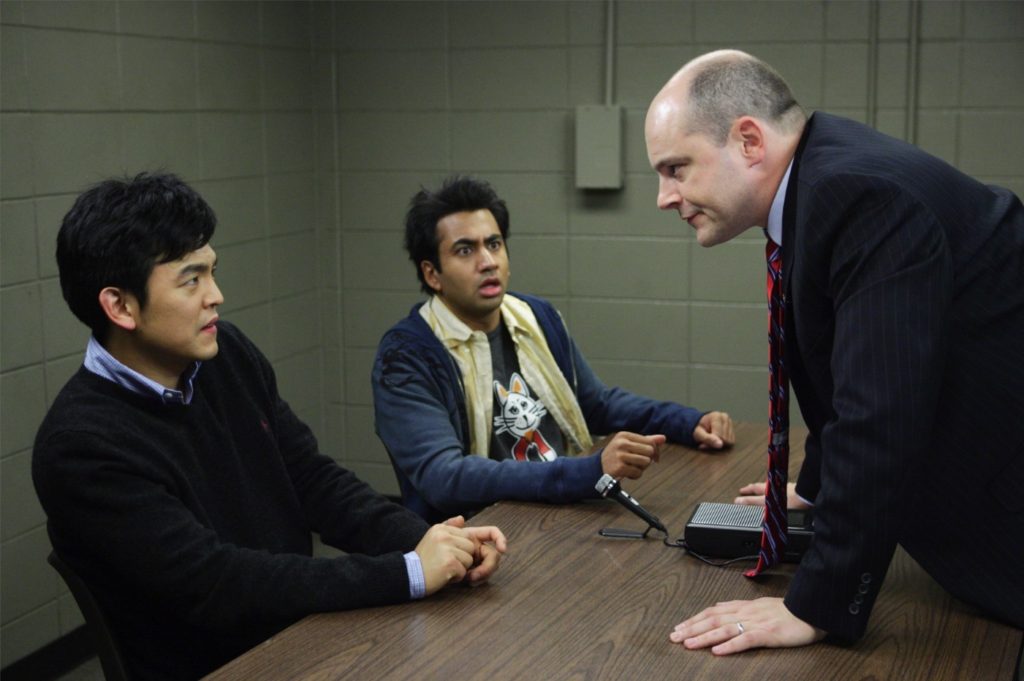
“In 1991, a Miami woman walking through the lobby of an office building casually noticed two men standing together. Several minutes after her departure, the men murdered a person working in the building. Police investigators determined that the woman was the only person who had observed the two suspects and could possibly describe them. In an initial standard interview with police, her memory of the men proved disappointingly sketchy. Police brought in psychologist Ronald Fisher to help the witness remember more detail. Fisher’s interview consisted of a series of memory-enhancing strategies which produced a breakthrough in the case: The woman reported a clear image of one of the suspects as he brushed the hair from in front of his eyes. She then recalled several details about his profile, including his having worn a silver earring.” (McLeod, 2010) Cognitive interviewing (Beatty and Willis, 2007; Fisher et al., 1989) is a method of interviewing victims and/or eyewitnesses that helps them remember what they saw at a crime scene. The method draws on the developments in fields of study that investigated how memory retrieval works (Memon and Higham, 1999). The primary purpose of cognitive interviewing is for the interviewer to help the interviewee reconstruct the context of a given situation with as much detail as possible, by asking questions about a range of details, such as environmental conditions, feelings and emotions, smells and sounds, etc. , to help them visualise their experience in as much detail as possible. Cognitive Interviewing in practice When I conducted my study of Polish migrants in Scotland and their “English Language Identity” (ELI), it was very important to me to get access to their detailed experiences in the migration context. The study had elements of constructivist grounded theory and, therefore, I really did not know at the time what I would find and how to find it. I wanted the “theory” or the understanding of whether ELI exists and how it is formed to emerge fully from the data I was collecting. However, after the pilot study to my second round of interviews, it became evident that the structure of the interview, which focused on complex issues surrounding the relationship between the English language and the participants’ sense of self, was problematic and reflected some of my own assumptions about the topic. The participants did not have enough freedom to express their opinions and some of the questions were leading the participants towards the reflections I had ‘hoped’ to hear, posing a threat to the validity of the findings. At the same time, I observed during the interviews that, when the participants were recollecting particular stories and events from the past (as opposed to expressing their opinions on the general theoretical ideas I asked them about), their accounts were much longer, more detailed, felt more ‘natural’ and, as the later analysis revealed, generated data that was not only more detailed, but also more relevant to the research topic. Based on these observations, and the feedback I collected after the interviews, I adopted an experimental approach to interviewing, by combining elements of ‘narrative interviewing’ and ‘cognitive interviewing’ (narrative interviewing is a technique that allows the interviewees more freedom to elaborate on the topics they find important and relevant than a traditional interview would, as it relies on their narration and retrospective accounts). When asked the first set of questions, regarding their first encounter with the ‘Scottish accent’ (which was one of the themes emerging from the analysis of the first round of interviews), for example, they were asked, and given time to recollect as much detail as possible (including the weather that day, their feelings, the exact place of the event, etc.), about that particular experience. This approach, although initially welcomed with reserve and humour, was found to be effective, by both me and the participants. Beatty, P. C. & Willis, G. B. (2007). Research synthesis: The practice of cognitive interviewing. Public Opinion Quarterly. 71(2), 287–311. Fisher, R. P., Geiselman, R. E. & Amador, M. (1989). Field text of the cognitive interview: Enhancing the recollection of actual victims and witnesses of crime. Journal of Applied Psychology, 74(5), 722–727. George, R and Clifford, B. (1995), ‘The cognitive interview – does it work?’ in G. Davies, et al. (eds.), Psychology, Law and Criminal Justice (New York: de Gruyter), 146-54. McLeod, S. (2010). Cognitive Interview. Accessed at https://www.simplypsychology.org/cognitive-interview.html Memon, A. & Higham, P. A. (1999). A review of the cognitive interview. Psychology, Crime & Law, 5, 177–196.